
Club Dredd
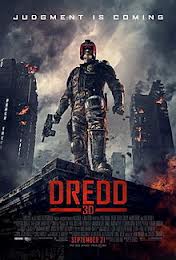 Who doesn’t like Judge Dredd? As a character, he’s got a certain visceral magnetism that should appeal to anyone who’s had their car stereo ripped off, been mugged, or worse. He dispenses the kind of justice that we all wish we could when we’re still smarting from a fresh crime: immediate and absolute. Dredd is a bit like Batman: incorruptible, uncompromising, righteous–but unlike Batsy, Dredd can use the front door. He’s got the law on his side. Hell, he is the law. And if you’re on the receiving end of a Street Judge’s sentencing, you can bet he’s gonna throw a helluva lot more than a book at you…
Bee-tee-dubs, movie spoilers to follow, so read with care.
(more…)
Crowd Funding: Bubble or Beginning?

Every year since its inception in July of 2009, Kickstarter (previously Kickstartr) has grown by leaps and bounds. Today it is the largest and most popular of all Crowdfunding services, but it is far from the only one out there. Indiegogo recently took the blogosphere by storm during its recent Tesla museum fundraising campaign, and doubtless new services will appear and rise over time, as this is the way the internet works. Is this phenomena sustainable, though? Can this pace be maintained ?
Since I have started writing about Kickstarter extensively, the question of whether or not it is a sustainable phenomena has come up several times. Though each question asked with a slightly different perspective, the common frame is, “how much bigger can crowd funding get?” Personally, I think it depends on a wide variety of factors, which I will discuss after we better quantify the current trends.
The Balancing Act of Reward Levels in Kickstarter
As we have discussed at length these last few weeks, there are so many things that go into making a successful Kickstarter. Though it would hard to be argue persuasively that a minor screw up in one or two areas would be likely to do much more than hinder a project, a major screw up in most of them could sink it. After a lot of research on the subject, it is my belief that no area of a Kickstarter is more sensitive to mistakes and miscalculations than the reward structure set by the project creator.
It is literally the canary in the coal mine, but please don’t take my word for it – let’s explore this issue together.
Casual gamer review: Guild Wars 2 (part: the first)
 I’m a gamer, but I lack the most valuable commodity a gamer can ask for: time to play games.
I’m busy!
I work a lot, and that sometimes means I travel far from my gaming PC. I’m also married, which is wonderful, but it does weigh on how my free time gets allocated. Then come the other commitments—things like writing comics and blog posts… So I don’t get to game quite as much as I used to.
I’m a Backer: 10,000 Hours

Last week in ‘I’m a backer,’ we discussed the excellent (and nostalgic) project Underground Kingdom. It finished strong, beating it’s funding goal with a surge in the final 48 hours that put it over the top. That makes two weeks in a row where we have discussed projects about games, of one sort or another. Though you’ll also likely get at least one game out this weeks project, that isn’t the point of it really. This week it is my privilege to present to you one of the more interesting and off beat projects it has been my pleasure to back, 10,000 Hours.
This project takes its insperation from Malcom Gladwell’s Outliers: The Story of Success, in which, per Wikipedia, “Gladwell repeatedly mentions the “10,000-Hour Rule”, claiming that the key to success in any field is, to a large extent, a matter of practicing a specific task for a total of around 10,000 hours.” Essentially 10,000 Hours is about achieving the dream of its participants – making video games – with an interesting twist: they are willing to let the rest of us take a peak behind the curtain, and support them in the process. For someone who is interested in both creative projects and the creative process, this is a pretty easy sell for me.. If any of you are as intrigued as I am though, by all means, read on.
SHIELD? On my TV? Surely you jest.
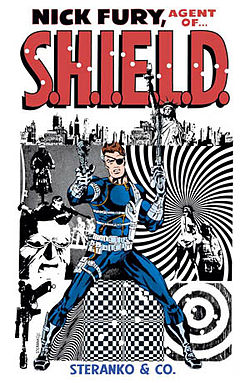 I’m about a week late on this one, so I wouldn’t exactly call it “breaking news” anymore, but by now you’ve probably heard that ABC has green-lighted a pilot for a series set in The Avengers film universe, about the day-to-day operations of SHIELD. And I’ve got say I’m a bit torn…
There are three forces at work here that make me nervous about this latest development in the Marvel Universe (more so than Guardians of the Galaxy, honestly). They are, in no particular order:
- The Superhero TV Show Effect
- The Whedon Effect
- The Nick Fury Conundrum
Wardenclyffe Art – Something Tesla this way Comes!

Last week we introduced you to one of the two main characters in The Wardenclyffe Horror. In good conscience though, we couldn’t rightly let another week go by without introducing the other: Nikola Tesla. Though this man, and his many contributions to the world we live in today, needs no introduction to many of our readers, the rest of you are welcome to read the official version here, or the short version here.
Even though all too often the credit goes to Edison, Tesla gives him a run for his money by most any measure. Basically, the modern world would be impossible without many of his inventions, discoveries and patents; he might be the most awesome person who ever lived. Just as there is no better narrator to tell a story (pretty much any story) than Mr Samuel Clemens, there is no one more interesting to inspire a story set in the early twentieth century than Tesla himself.
Blind Spot: Finding Your Own Way

So you’ve put up your project up on Kickstarter and get some of that free internet money. Now you can relax and let the easy money flow your way. Who cares if most projects flat line – yours will buck the trend, and continue its effortless upward trajectory. The website’s active community will be all over your pitch, and should have it funded in no time, right?
Wrong. Probably.
It is possible that your idea is viral enough or you are fortunate enough to be plastered all over the front page by a staff pick or project of the day; if that happens your project might succeed on its own. If this unlikely occurrence does not happen to you though, by all means read on.
Breaking News: Project Eternity

Note: as I am traveling for work, the formating on this post could use a little work. I will remedy this as soon as I am able.
Setting a new land speed record, Obsidian entertainment has set the standard when it comes to funding speed. Less than 24 hours after its Kickstarter has begun (7pm MDT yesterday) they have completed their ambitious initial funding goal of $1.1 million. This gives them 30 more days to see just how far they can push the needle.
Though the speed and scope involved is certainly surprising, one thing that is not is the ardor of their fans. The gamers that have been waiting for the successor, spiritual or otherwise, to such classics as Planescape: Torment, Fallout 1&2, Baldur’s Gate, and my personal favorite – Arcanum, are legion. In large part, the success of the recent Wasteland 2 and Shadowrun Returns projects were due to this same fan base. Despite the fact that mainstream developers no longer seem interested in making these tactical, story-intensive games, their fans have never given up hope.
ElfQuest Returns!
Here’s a discovery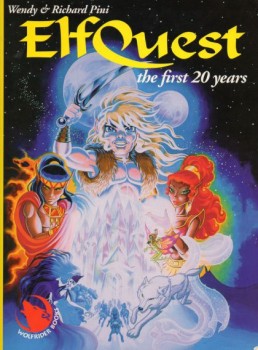 that recently brought me great joy: BoingBoing has begun publishing new ElfQuest strips by creators Wendy and Richard Pini! The Pinis, who’ve been spinning yarns about elves and their various quests since 1978, have launched ElfQuest: The Final Quest, a new web series that aims to bring some closure to a story that spans over thirty years.

