
Review: FTL Faster Than Light

FTL: Faster than light was the second project I backed on Kickstarter when I was introduced to the site in March. Early last week, I was given access to the beta, two weeks before it’s scheduled release on September 14th (Today.) This is great for two reasons: it’s a pretty awesome game, and it is the first product I have ever received from a project I backed.
It’s a great feeling to support something and finally get your hands on it after a long wait; it’s a better feeling for it to exceed your expectations in the process. Though I will give the developers credit by saying they did a good job of keeping their backers informed, each update only made me want to play more. Given that it is now available for anyone to purchase through Steam or GOG, I thought that everyone that had not yet chanced upon this gem might appreciate a review.
Nostalgia and The X-Men

The other night I found myself reading through a short run of comics from my child hood. It was my old favorite, The X-men – specifically the arc that spawned Bishop and killed Jean Grey (briefly, again). Though these days I think that The Authority, Supreme Power, or even many of The Ultimate’s story lines are far more compelling, these old story lines never fail to take me back to sunny days on Balsam street and the ratty comic shop I favored in my youth both for floppies and magic cards.
Today though, it was not the story, or even the memories of riding bikes all over town as a teenager that entranced me; it was the ads. What a difference two decades make.
I’m a Backer: Underground Kingdom

Last week in ‘I’m a backer,’ we discussed the excellent project Viticulture. It continues to do well, reaching funded status last week, with three weeks left on the clock for those all important stretch goals. Keeping with our theme of games, however – we switch from board to electronic for a truly retro title: Underground Kingdom.
Did you like the “Choose your own Adventure” series as a kid? Wish there was an equivalent for today either for you or your children? Have an iPhone or iPad? Have I got a deal for you. Underground Kingdom is, in the words of the creators, “an interactive gamebook for iPad and iPhone, adapted from the classic Choose Your Own Adventure®* book from Edward Packard.” They promise to “bring the experience to a new level, as it will include interactive features, amazing illustrations, animations and sounds.” Basically, they are taking the multi-choice stories of yore, and updating them with the best technology has to offer today.
This is a pretty brilliant idea if you ask me; though I am not sure the world really needs this, I am pretty sure it wants it. Want to know why I’m giving them my money? Read on.
First art from the Wardenclyffe Horror!

Handsome devil, Mark Twain.
Well, here it is: the first piece of promotional art from the Wardenclyffe Horror.
And who else should have the distinction of being in the first piece of art from the Wardenclyffe Horror, but Mark Twain?
This piece was done by our most excellent collaborator Robert Rath, as a concept drawing of Twain, who features prominently in the Wardenclyffe story. Robert did an amazing job of capturing the aging Twain’s thoughtful demeanor. The set of his jaw reflects a sort of weary resolution. His slightly furrowed brow denotes focus on matters of vital importance. But his eyes have a spark in them that really speaks to the wry wit and sharp intellect that Twain is most renowned for.
In short, Robert nailed it. And fast too!
Which, by way of contrast, sorta highlights the challenges we had writing the damn thing.
Mind the Gap: Kickstarter Funding Trends
 Every crowd funding project is a unique and beautiful snowflake, full of the creator’s ardent belief that they will buck the odds, triumph, and succeed in their dream. Every project creator has different assets, skill sets, and experience to assist them in making the most of their short funding window. Some have wonderful art assets to dazzle potential backers, others have social networks that are both wide and deep or an idea that was born to go viral, and a few even have the money necessary to buy advertising, hoping to turn a small investment into a big idea.
But if every creator is so different, then why do the funding curves for so many projects look so similar. If possibilities are limitless, then why are are the results cast in so few molds?
Board Games: Welcome to my Closet
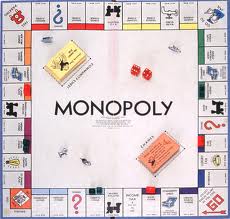
American board games have, until recently been dominated by simple rules, adversarial tactics, and a large degree of randomness. Like so many of you, I grew up with this instantly recognizable example of gaming history, and like so many of you I am sick to death of it. Along with this Parker Brothers classic, I enjoyed (and eventually grew tired of) all the basics: Life, Risk, Sorry, Othello, Yahtzee, Rummy, Chess, and so many others. (Full disclosure: I do however still own a copy of Connect Four. I love that game.)
During my teenage years, I largely outgrew them as I discovered more complex and satisfying games :RPGs and CCGs. Though I would still play the occasional bout of Axis and Allies, board games as a whole were no longer on my short list. If you had asked me then, if I was ever likely to play them again, I would have told you that it was very unlikely.
I would have been very wrong.
Kickstarter and Accountability, or Who to Blame
 So in crowd funding, you give your hard earned money to complete strangers in the hopes that they will deliver on promises made. What could possibly go wrong? I mean, everyone on the internet is who they say they are, and has the best of intentions, right?
So what if someone does take your money, and fails to deliver? What are your options? What is Kickstarter’s responsibility to make you whole? As I have mentioned previously I have participated in almost 30 Kickstarter projects (and one Indiegogo project) to date, I also have plans to start my own project in the not too distant future. As one might imagine, this makes me very interested in the whole accountability question, and even before NPR turned their spot light on this issue and forced Kickstarter to respond, it was one that my friends and I had already given a great deal of thought to; the answers might surprise you.
The Golden Age of Film

If you are a nerd, a geek, or a rabid comic book fan, there has never been a better time to be alive. Though there have been more than a few misses with some of the recent comic book movies, even the misses have been at worst average or mediocre. That list in my opinion includes: Superman Returns, Thor, Iron Man 2, Green Lantern, The Amazing Spider Man and both Fantastic Four movies – the hits though have been truly seismic. You could arguably start this period in 2005 with Batman Begins or in 2008 with Iron Man, depending on your franchise preference it is certainly still ongoing, given the slew of comic book movies on the horizon.
All aboard for MorrisonCon?

Hot on the heels of the San Diego Comic Convention comes Grant Morrison’s own (first annual?) MorrisonCon—a comic book and esoterica extravaganza curated by none other than comics’ own chaos magician in chief.
MorrisonCon promises “an intimate gathering featuring a hand-picked selection of some of the industry’s most exciting comic creators,” and the guest list doesn’t disappoint. Jim Lee, Darick Robertson, and (personal hero) Robert Kirkman are just a few of the high profile comic literati in attendance, for a con that promises fans serious face time with creators (and afterhours parties at the Hard Rock Hotel’s Body English night club…)
I’m a Backer: Viticulture
Today I am starting up a new (and hopefully regular) feature, “I’m a backer,” where I tell you not just about what I think is new or interesting on Kickstarter, but about a project I like enough to actually give it my money. This method of review is the most honest I can think of when it comes to Kickstarter, which, occasionally has problems. I detailed some of these last week, in a previous post “Kickstarter Pitfalls.”
I find a great many posts on the internet of people talking up their own crowd funding projects, and you occasionally large sites take up the cause of particularly successful projects, but I would love to see more conversation and dialogue to go along with all PR.

